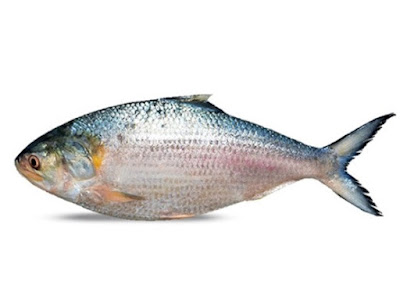
The palla fish of Rohri is the Indus hilsa, Tenualosa ilisha — a sea fish that swims hundreds of miles up the Indus to spawn. Richard Burton watched it being hunted in 1877. His account of the Mohana fishermen, the Khwaja Khizr legend and the barrages that finally stopped the run is the best record we have of a fish that made Rohri famous.
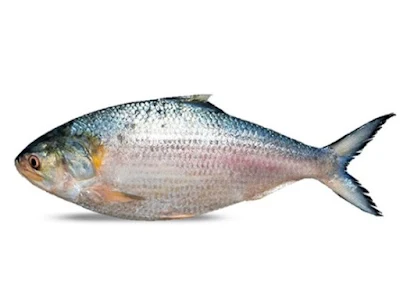
Palla fish at a glance
| Detail | Record |
|---|---|
| Scientific name | Tenualosa ilisha (Hamilton, 1822), family Clupeidae — a herring |
| English names | Indus hilsa, sable-fish, “Indus-salmon” (Burton, 1877) |
| Local names | Pallu machhi (Sindhi), pallah (Urdu), ilish (Bengali) |
| Type | Anadromous — lives at sea, spawns in fresh water |
| Size near Rohri | About 2–3 lb and 20 inches (Burton’s measurement at Bukkur) |
| Season | March, when they were rare, to June, when they were most abundant |
| Range upstream | Rarely above Bukkur island; occasional strays as far as Multan |
| Status today | Least Concern globally, but the Indus run is commercially depleted |
What the palla fish actually is
The palla is a herring, not a carp or a catfish. It belongs to the same genus as ilish, the hilsa that Bengalis prize above every other fish, and it carries the same traits: a deep silver body, tiny scales that come away in the hand, fine bones in endless rows, and a layer of rich oil under the skin that makes the flesh taste unlike any river fish in South Asia.
What sets it apart from a fish like the Indus and its tributaries is its life cycle. The palla is anadromous, the same strategy the Atlantic salmon uses: it feeds and grows in the salt water of the Arabian Sea, then turns into the river mouth and swims upstream to breed in fresh water. In the Indus, that means leaving the sea near the delta, passing Thatta and Kotri, and pushing north against the current until silt, temperature and instinct tell it to stop. Historically, for many of them, that stopping point was the Rohri–Sukkur gorge.
Old writers were unsure what to call it. Burton’s footnote records the argument plainly: one authority placed it among the carps, while Dr Francis Day, the great Victorian ichthyologist of India, called it a Clupea — a herring — and that is the classification that survived.
Why the fish chose Rohri: a gorge, an island and a saint
Rohri sits on a broken limestone cliff about forty-five feet above the river, facing Sukkur across a channel broken by Bukkur island. This is the narrowest and fastest stretch of the upper Indus, and the rock below the town forms deep, cold pools where a migrating fish can hold. Burton measured the two channels himself — the Sukkur fork at about 600 feet after it was widened, Bukkur island about 1,150 feet across, the Rohri fork about 850 feet.
Geography alone does not explain the fish’s reputation. Religion does. In the middle of the channel stands the island shrine of Khwaja Khizr, the immortal river saint known locally as Zinda Pir, “the living saint”. Burton crossed to it by the little government steam-ferry Sukkur and found Hindu women aboard, bound for the same island. He recorded what he saw there: a Persian chronogram dating the court to AH 341 (AD 952); a blue gateway sagging on sand; three domes and a cave of the Four Friends to the east — and, he noted, Hindus worshipping Jenda Pir, who “is nothing but the River Indus”, while the Sikhs kept a small shrine of their own. Nowhere, he wrote, was the Sindhi confusion of faiths better illustrated.
Local belief attached the fish to that shrine. The palla, people said, came upstream to pay its respects, and only after that visit did its flesh turn sweet and its scales turn silver. Burton’s own sentence on the subject is worth quoting, because it is the earliest written trace of the legend:
“We have now, Mr. John Bull, done our Bakar, a place once so holy that the Pallo never would turn tail upon it: the intelligent and reverential fishes always retired with the rigid court ceremonies adopted when approaching it.”
— Richard F. Burton, Sind Revisited, vol. II (1877), describing Bukkur island
You will find the modern version of that story at the shrine of Khwaja Khizr and the pilgrimage traditions of Rohri, where the annual urs still draws boats to the island.
Burton’s 1877 account of palla fishing
Burton’s chapter on the Indus fishermen is the single richest description of the palla fishery that survives. He calls the fish by four names in two lines — pallo, sable-fish, “the Hilsa of the Ganges”, and, most memorably, the Indus-salmon — and then describes a method that no one uses any more:
“The Mohano, who wears only a large turban and a small languti, or T-bandage, first launches his craft, a vessel of well-baked clay, which will not expose him to danger by breaking. Mostly made at Haydarabad, it is a jar three or four feet in diameter by about two in height; flattened, open-mouthed, and shaped somewhat like a gigantic turnip. Salaming to the river … he so disposes himself that the pit of his stomach covers the aperture, and battens down, as it were, his hatches: he then strikes out with the stream, paddling behind, like a frog sitting upon a chip.”
— Sind Revisited, vol. II, p. 292
The rest of the technique reads like a manual. Reaching a likely pool, or the wake of a steamer where fish were thought to follow, the fisherman dropped a pouch net fixed to the forked end of a long pole of bhan, poplar wood, usually three pieces lashed together. A check-string closed the net once the fish was inside. He felt the fish through the pole, heaved the net up, took a knife from his girdle, “settled the straggler’s business”, and dropped the body into the hollow jar he was lying on. Then he paddled ashore and walked several miles back up the bank, jar on his head, to do it again.
Two corrections to the popular telling are worth making. First, Burton is explicit that the jar method ran only as far as “Sita, between Sehwan and Sakhar” — that is, downstream of Rohri. Above that point, palla nets hung from the stems of the small beri boats instead. Second, he says the fish “seldom pass above Bakar”, meaning Bukkur: Rohri’s fishery was fed by fish that stopped in the gorge rather than by a run that continued hundreds of miles north.
He also recorded the trade details that make the fish’s reputation concrete:
- Size: “The Pallo varies in weight from two to three pounds, and the length is about twenty inches.”
- Best fish: those taken nearest Bukkur.
- Season: “between March, when they are rare, and June, when they are most abundant”.
- Royal claim: “The first Pallo of the year always claimed a handsome present from the Amirs.”
- Occasional strays: once every two or three summers, palla were caught as far upstream as Multan.
And he ate it, in April, boiled, when the fish was fresh from the sea and still lean. The dish came with fennel sauce. “Some travellers compare it with potted lobster,” he wrote, “others with salmon; others again with fresh herrings; and I, profanely, with mackerel.” Even the bones got a line — they were there, he said, “by way of preventing over-perfection”.
The Mohana and Paba fishermen of Rohri
Burton believed the Mohana, the river fishermen of Sindh, were descended from converted Hindus, and he described their customs with a mixture of admiration and distaste: they never entered the water without a salam asking it not to be their grave, and they made rice offerings to the river. They were, in his words, “an athletic, laborious, pleasure-loving, merry-hearted” people who lived entirely off the current.
In Rohri, the fishing trade is remembered as the work of the Paba community, whose holdings local tradition says once ran along both channels from the Khwaja Khizr island down past Bukkur. Documentary proof is thin — family and colonial land records are the place to look, not the internet — but the outline is not in doubt: a fishing clan tied to a specific stretch of water, selling into a riverside fish market that Rohri families still remember as the Bazar-e-Mahi Faroshan, the fish-sellers’ bazaar. The trade sat naturally beside the town’s bigger markets; the history of Tilsi Market describes the same commercial world of a century ago.
How the barrages ended the run
The palla’s problem is simple arithmetic: a fish that must swim upstream cannot pass a wall. The Indus was progressively closed by barrages built for irrigation, none of them with a fish ladder designed for a migrating herring.
| Year | Structure | Effect on the palla run |
|---|---|---|
| 1932 | Sukkur Barrage | Closed the river immediately above Rohri. Fish could still reach the gorge, but the upper Indus was sealed off. |
| 1955 | Kotri Barrage | Built near the delta, closer to the sea. With no effective passage, the number of fish entering the river at all began to fall. |
| 1962 | Guddu Barrage | Further upstream again, removing any chance of a run past Sukkur. |
| 2000s– | Reduced flows below Kotri | Low dry-season discharge and seawater intrusion into the delta shrank the spawning and nursery grounds. |
Add unregulated netting of juveniles, silt blocking spawning beds in the delta, and the steady drop in winter flows, and the result is a fish that now arrives at Rohri as an event rather than a season. Studies used by development agencies put the fall in the upper-Indus catch at around 90 per cent against the pre-barrage years; the IUCN assessment of the delta put the loss of productive land to seawater intrusion at roughly 3.5 million acres. The Sukkur Barrage was begun in 1923 and opened in 1932, and its effect on the river’s fish is still being argued about.
There are good years. After the 2022 floods, palla were reported far upstream again, and fishing families along the Rohri–Sukkur reach had a season worth remembering. That is what a free river looks like, briefly.
Why palla is the most expensive fish in Sindh
Scarcity explains the price, but not the devotion. In a Sindhi kitchen the palla is treated as a luxury with a working-class history: fried hard in mustard oil with turmeric and chilli, grilled over coals, or cooked into a palla pulao with the roe. Cooks separate the sexes: anyari for a female full of roe, kheero for a male with milt, and both are considered better eating than the fillet by people who know the fish. The fat is the point — it is why the fish is compared to salmon, and why it goes off faster than a lean river fish ever does.
In season, a good palla can cost several times the price of any other freshwater fish sold in upper Sindh, and hotels in Karachi and Sukkur compete for the first arrivals. If you want to eat it the way locals do, look for the small riverside kitchens rather than the big restaurants; our guide to where to eat in Rohri covers the practical side.
Whether the palla run can be revived
Not by sentiment, and probably not by one intervention. Conservation groups and fisheries researchers in Sindh have pushed for three things for years: fish ladders fitted to barrage gates, seasonal bans on nets that take juveniles and spawning adults, and an enforceable minimum flow below Kotri so the delta keeps enough fresh water to function. None is cheap, and all three cut against powerful irrigation interests.
What works in the palla’s favour is that the species itself is resilient. Tenualosa ilisha is assessed as Least Concern across its whole range, from the Persian Gulf to Myanmar, because the Bangladeshi and Indian hilsa fisheries are vast. The Indus population is the fragile part, not the species. A river with water and a way past the gates would fill with fish again within a few seasons, as the flood years show.
Visiting Rohri for the palla
Rohri is easy to reach: it is a stop on the main Karachi–Lahore railway at Rohri Junction, and Sukkur airport is a short drive across the river. The town’s own sights — the cliff-top bazaar, the shrine of the Holy Hair in the Jami Masjid, the Lansdowne Bridge of 1889 — are covered in the Rohri heritage guide.
For the fish, come between March and June. That is also the worst time of year for heat — daytime temperatures push past 45°C — so most visitors pair a short palla-season trip with a longer winter visit between November and February, when the river is low, the light is good, and the shrine island can be reached by boat without much trouble.
A practical warning: the Khwaja Khizr shrine and the Bukkur island crossings are working religious sites. Ask before photographing, dress conservatively, and take a local boatman rather than negotiating your own crossing. The British camp of 1846 and the old cantonment on the Sukkur side are the other colonial-era stops within walking distance of the river.
Frequently asked questions about the palla fish of Rohri
What is the palla fish called in English?
Palla is the Sindhi name for the Indus hilsa, Tenualosa ilisha. English writers have called it the sable-fish and, since Richard Burton, the “Indus-salmon”. In Bengali the same species is called ilish, and in Urdu pallah.
Is palla the same fish as Bengali hilsa?
Yes — it is the same species, Tenualosa ilisha. What differs is the river. The Ganges–Padma hilsa is a huge, well-managed fishery; the Indus run is small, obstructed by barrages and now commercially depleted.
Why is palla so expensive?
Because very few fish reach upper Sindh. Barrages at Kotri and Sukkur, low dry-season flows and heavy netting have cut the run to a fraction of its former size, while demand from Sukkur, Karachi and overseas Sindhis has not fallen. The fish’s high oil content and short shelf life add to the cost.
When is palla season in Rohri?
Burton recorded the season as running from March, when fish were rare, to June, when they were most abundant. The same window still holds, though the number of fish in it is far smaller. The first arrivals after the spring rise are the most sought after.
What did Richard Burton write about palla?
In Sind Revisited (1877, vol. II, pp. 292–295) he described Mohana fishermen floating on baked-clay jars, catching palla with a pouch net on a poplar pole and a check-string, measuring the fish at 2–3 lb and 20 inches, noting that the finest came from near Bukkur, and comparing the taste to potted lobster, salmon, herring and mackerel.
Why did the palla disappear from Rohri?
The Indus was closed by barrages without fish passage — Sukkur (1932), Kotri (1955) and Guddu (1962) — and dry-season flows below Kotri fell far enough to damage the delta nursery grounds. A fish that must swim upstream cannot cross a wall, so the run shrank to occasional flood-year visitors.
Can you still catch palla at Rohri today?
Rarely, and mostly in good flood years. The surviving fishery is concentrated downstream, nearer Kotri and the delta. When palla do appear in the Rohri–Sukkur reach they sell within hours, usually by word of mouth before they reach a stall.
Where is the Khwaja Khizr shrine?
On a small island in the Indus between Rohri and Sukkur, facing the town across the channel. It is reached by boat, is sacred to Muslims as the shrine of Khwaja Khizr (Zinda Pir) and is also visited by Hindus, who venerate the river there as Jenda Pir.
Sources and further reading
- Burton, Richard F. Sind Revisited: A View of the Country and People, vol. II (London, 1877), pp. 218–229 and 292–295. Full text (PDF, Bérose archive).
- Burton, Richard F. Sindh, and the Races that Inhabit the Valley of the Indus (London: Wm. H. Allen, 1851). Internet Archive copy.
- FishBase. Tenualosa ilisha (Hamilton, 1822), Hilsa shad. Species profile.
- Wikipedia. Ilish (Tenualosa ilisha) — distribution and fisheries.
- IUCN. Indus Delta, Pakistan: economic costs of reduction in freshwater flows (2003). PDF.
- World Bank. Pakistan: Water Sector Improvement project documentation, including Indus fisheries data. PDF.
- Google Arts & Culture. Palla fish from the Indus River in Sindh.
Read next
- Upper Sindh fish hatchery and sustainable aquaculture — what restocking the Indus actually involves.
- The timeless legacy of the Indus River — the river that carries the palla.
- Sukkur Barrage: the 1923 foundation stone
- Sacred shores: Rohri’s dual pilgrimage
- Tilsi Market, Rohri (1911–1959)
- Rohri heritage guide
Written by Sayed Sajjad Hussain Shah Musavi for Rohri.net. Primary quotation verified against the 1877 text of Sind Revisited, vol. II; verse lining and spelling follow the printed edition.
Frequently Asked Questions
What is the palla fish called in English?
Palla is the Sindhi name for the Indus hilsa, Tenualosa ilisha. English writers have called it the sable-fish and, since Richard Burton, the Indus-salmon. In Bengali the same species is called ilish, and in Urdu pallah.
Is palla the same fish as Bengali hilsa?
Yes, it is the same species, Tenualosa ilisha. What differs is the river. The Ganges-Padma hilsa is a huge, well-managed fishery; the Indus run is small, obstructed by barrages and now commercially depleted.
Why is palla so expensive?
Because very few fish reach upper Sindh. Barrages at Kotri and Sukkur, low dry-season flows and heavy netting have cut the run to a fraction of its former size, while demand from Sukkur, Karachi and overseas Sindhis has not fallen. The fish’s high oil content and short shelf life add to the cost.
When is palla season in Rohri?
Richard Burton recorded the season as running from March, when fish were rare, to June, when they were most abundant. The same window still holds, though the number of fish in it is far smaller. The first arrivals after the spring rise are the most sought after.
What did Richard Burton write about palla?
In Sind Revisited (1877, vol. II, pp. 292-295) he described Mohana fishermen floating on baked-clay jars, catching palla with a pouch net on a poplar pole and a check-string, measuring the fish at 2-3 lb and 20 inches, noting that the finest came from near Bukkur, and comparing the taste to potted lobster, salmon, herring and mackerel.
Why did the palla disappear from Rohri?
The Indus was closed by barrages without fish passage – Sukkur in 1932, Kotri in 1955 and Guddu in 1962 – and dry-season flows below Kotri fell far enough to damage the delta nursery grounds. A fish that must swim upstream cannot cross a wall, so the run shrank to occasional flood-year visitors.
Can you still catch palla at Rohri today?
Rarely, and mostly in good flood years. The surviving fishery is concentrated downstream, nearer Kotri and the delta. When palla do appear in the Rohri-Sukkur reach they sell within hours, usually by word of mouth before they reach a stall.
Where is the Khwaja Khizr shrine?
On a small island in the Indus between Rohri and Sukkur, facing the town across the channel. It is reached by boat, is sacred to Muslims as the shrine of Khwaja Khizr (Zinda Pir) and is also visited by Hindus, who venerate the river there as Jenda Pir.

Leave a Reply