A hospital town before it had a hospital
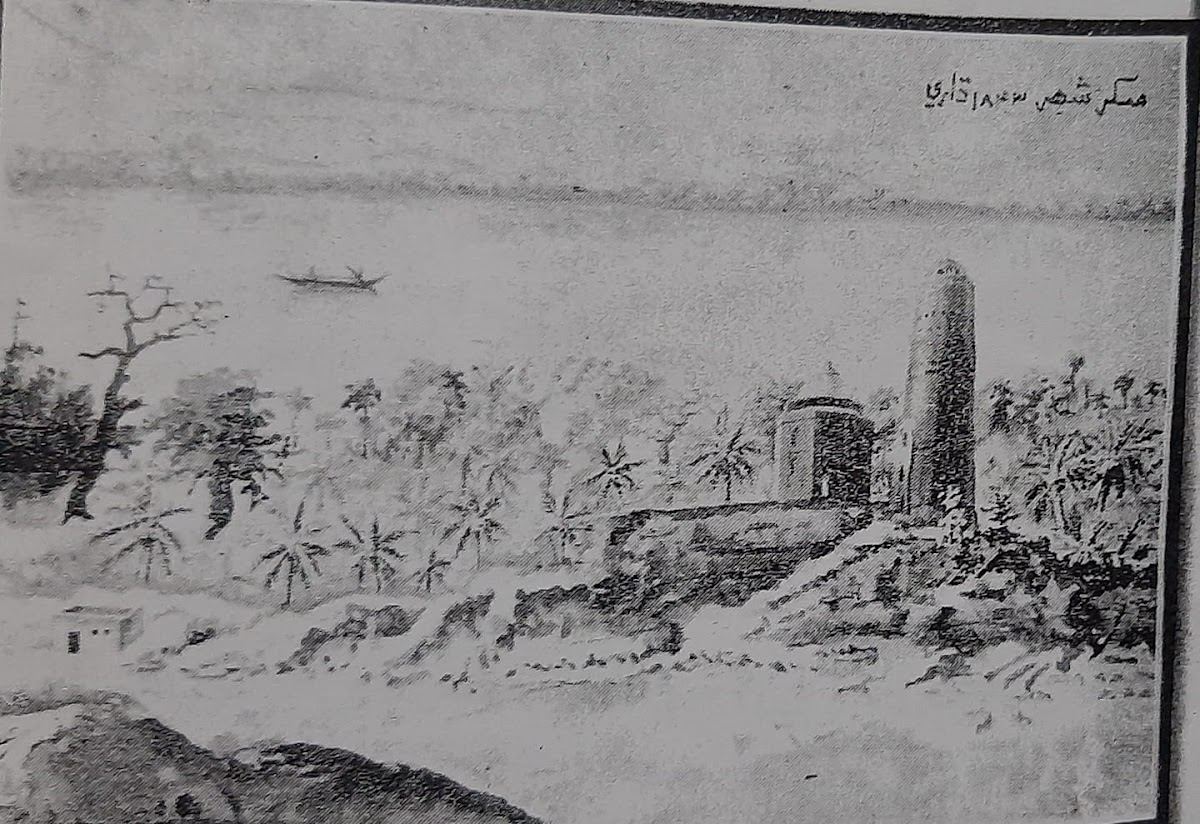
Sukkur’s first hospital is usually given one line in local histories: 1859, on the limestone slope below the Masum Shah Minaret, in the lane that now runs behind the old Utility Store. The building is still there, still in public use as a dispensary. What is much harder to find is anything written about it at the time.
That gap matters, because Sukkur has a longer medical history than the one-line version suggests, and the best-documented part of it is not a civil hospital at all. It is a military hospital, crowded with Scottish soldiers, whose dead are commemorated four thousand miles away in Edinburgh.
This article separates three things that are often mixed together: what colonial records actually document, what Sukkur remembers, and what neither can settle. The result is a more useful history than either version on its own — and a better guide for anyone walking the ground between the minaret and the clock tower.
| Sukkur’s hospitals at a glance | |
|---|---|
| Earliest hospital on record | Military hospital, Sukkur garrison, 1840s. Captain Keogh of the 78th Highlanders: more than 800 men under treatment at one time in 1844. |
| Documented civil hospital | Sukkur Civil Hospital, opened 1880 on the hill north of the town, overlooking the railway. |
| Remembered civil hospital | 1859, Chhapri slope below the Masum Shah Minaret; later named after Khan Bahadur Ghous Ali Shah Jilani (1842–1905). |
| Disease event that shaped both | Cholera and “remittent fever” in the garrison, 1844; survivors evacuated to Hyderabad on 21 and 25 December 1844. |
| International memorial | Monument by John Steell in St Giles’ Cathedral, Edinburgh, paid for by the regiment’s own subscriptions. |
| Present use of the old building | Civil dispensary, in the lane behind the former Utility Store, Chhapri incline, Sukkur. |
Why a garrison town needed beds
Sukkur sits where the Indus narrows against limestone rock, opposite Rohri, at the point where the river crossing carried the road north towards Multan, Kabul and Central Asia. For centuries the town’s medical care was domestic: hakims and herbalists, midwives, and family remedies. There was no institution with beds for the poor, and no building whose purpose was to keep sick strangers alive.
That changed abruptly in 1843, when Sir Charles Napier annexed Sindh after the battle of Miani and the British army inherited the province’s river ports, ferries and garrison towns. Sukkur became a staging point: troops, stores and invalids moved up and down the Indus through it, and the army needed somewhere to put men who could not march.
The result was a hospital built for soldiers, not citizens. Local accounts date it to 1843 and say it stood opposite the minaret, reserved for British troops. The documents that survive do not give a foundation date, but they do something more useful: they show the hospital at work, at the worst possible moment.
The hospital we can actually document: Sukkur, 1844
In 1842, as news of the disasters in Afghanistan reached London, the 78th (Ross-shire Buffs) and other regiments were rushed to India. On arrival they were sent to Sindh and ordered up the Indus to Sukkur. They arrived in good health. Then the sickness began.
Captain Keogh of the 78th left an account that is one of the most direct descriptions of a Sukkur hospital ever written:
“The hospital, a large one, was of course filled at once; some of the barrack-rooms were converted into wards, and at one time there were upwards of 800 men under treatment.”
Eight hundred patients is not a ward. It is a garrison laid low. Keogh described a fever that “continued, without cessation” throughout the regiment’s stay, killing men within hours of speaking to them. On 21 and 25 December 1844 the survivors were embarked on country boats for Hyderabad, and along the way the dead were buried wherever the boats moored, wrapped in blankets and rugs, graves lined with thorns against jackals.
What killed them was almost certainly cholera, though the doctors at the time could not say so with confidence. The regimental history blamed malaria contracted in the swampy tracts along the march. Dr Kirk of the Bengal Service, writing in Allen’s Indian Mail, blamed “exhalations from the limestone rocks on which the barracks were built” — which is worth pausing on, because Sukkur’s barracks and its later hill hospital stood on exactly that rock.
The political aftermath reached London. The 78th accused General Napier of marching them upriver too late in the season, at the start of the hot weather; Napier’s brother Sir William answered the charge in The Times of 24 March 1845. The regiment’s officers, NCOs and privates then subscribed about 1,000 rupees — roughly £100 — for a memorial to their comrades, and commissioned John Steell, sculptor to Queen Victoria, to make it. It stands in St Giles’ Cathedral in Edinburgh.
So there is a Sukkur monument in Scotland, and its inscription is one of the few contemporary statements about what the town’s hospital lived through. The local tradition of a military hospital closed by cholera is not invention. It is memory of a real catastrophe — dated by the documents to 1844 rather than 1845, and told with the scale restored.
What became of the building afterwards is, again, Sukkur’s account rather than the archive’s. Local tradition, as recorded by the Rohri oral historian Sayed Imdad Hussain Shah Rizvi, holds that a second cholera season in 1845 forced the army off the hill, that the hospital closed, and that the building was later converted into the Government High School that still stands opposite the minaret. The printed record supports the middle of that story without ever naming the building. The 1907 Gazetteer notes that the Sukkur high school on Minaret Road “is said to have existed before 1859” and that its exact origin was unknown even then — the same sentence I return to below, because it catches the whole problem of Sukkur’s institutional memory in one line. A school that old, on that road, facing the minaret, is consistent with a reused hospital building. Consistency is not proof, and no document I could find records the conversion.
What a Victorian hospital looked like, and why it changed
Medical opinion in 1844 explained epidemics through miasma: bad air rising from damp ground, crowded wards and rotting matter. Cholera was not yet understood as a waterborne disease. John Snow’s Broad Street investigation came in 1854, and Ronald Ross proved the mosquito transmission of malaria only in 1897. In 1844 the army’s own theory — exhalations from limestone — pointed towards the solution it actually adopted: move the sick into clean air, spread out, uphill.
That logic produced the “pavilion plan”, the standard Victorian hospital design of separate single-storey blocks with cross-ventilation. And it is precisely what the 1907 Gazetteer describes at Sukkur: not one building, but “a series of single-storied buildings on the hill to the north of the town”. Fifteen wards, each with its own air. Read the architecture as a medical argument, and the Sukkur Civil Hospital of 1880 is a direct reply to the disaster of 1844.
The 1859 hospital at Chhapri: what Sukkur remembers
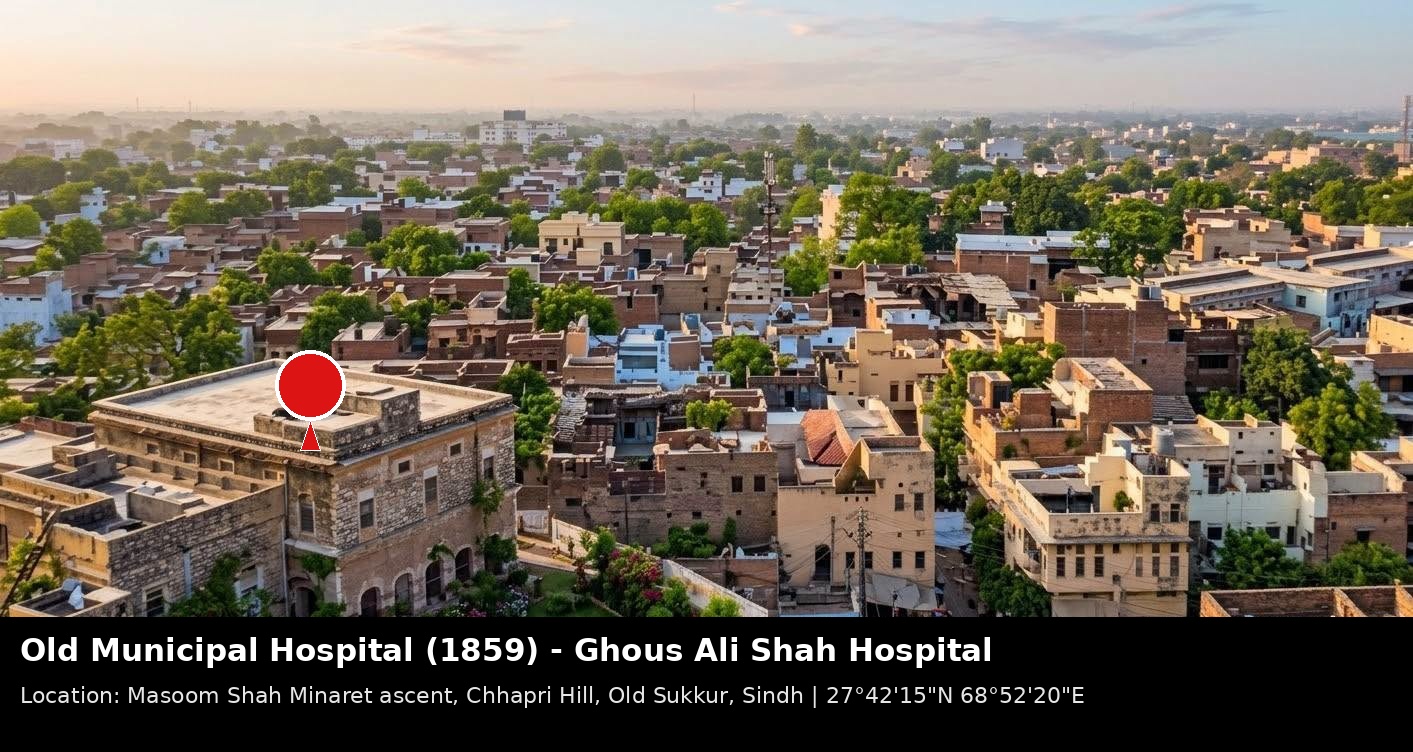
Local histories and family memory in Sukkur describe a different institution, in a different part of town. According to that account, a civil hospital was established in 1859 on the Chhapri slope, on the road descending from the Masum Shah Minaret towards Ghanta Ghar, in the turn behind the building later occupied by the Utility Store.
The details are specific enough to be checkable, which is what makes them worth recording:
- It was the first civil facility in the city to offer inpatient beds to the general public — described in Sindhi as maseebatan ji rahan jo bandobast, the arrangement of lodging for the sick.
- It was attended by medical officers remembered as Dr Benjamin and later Dr Ehsan.
- The City Magistrate’s court operated directly beside it.
- The building survives and is used as a civil dispensary.
I could not find a printed source for the date. No gazetteer, municipal report, medical return or newspaper account that I was able to locate names an 1859 hospital in Sukkur. The 1907 Gazetteer of Sukkur District does list dispensaries in the town — including a municipal dispensary and mission and municipal female dispensaries founded in 1912 — but where its health table asks for the year of establishment, the entry for the older Sukkur dispensaries reads “not known”.
That is a small but telling fact. By 1907, the official record had already lost the founding date of Sukkur’s own dispensaries. The 1859 date survives in the town, not in the archive — which is exactly what one would expect of an institution founded by a municipal board whose early minutes were never printed, in a district whose records were kept in Bombay and Sindhi, not in London.
Ghous Ali Shah Jilani, the man the building remembers
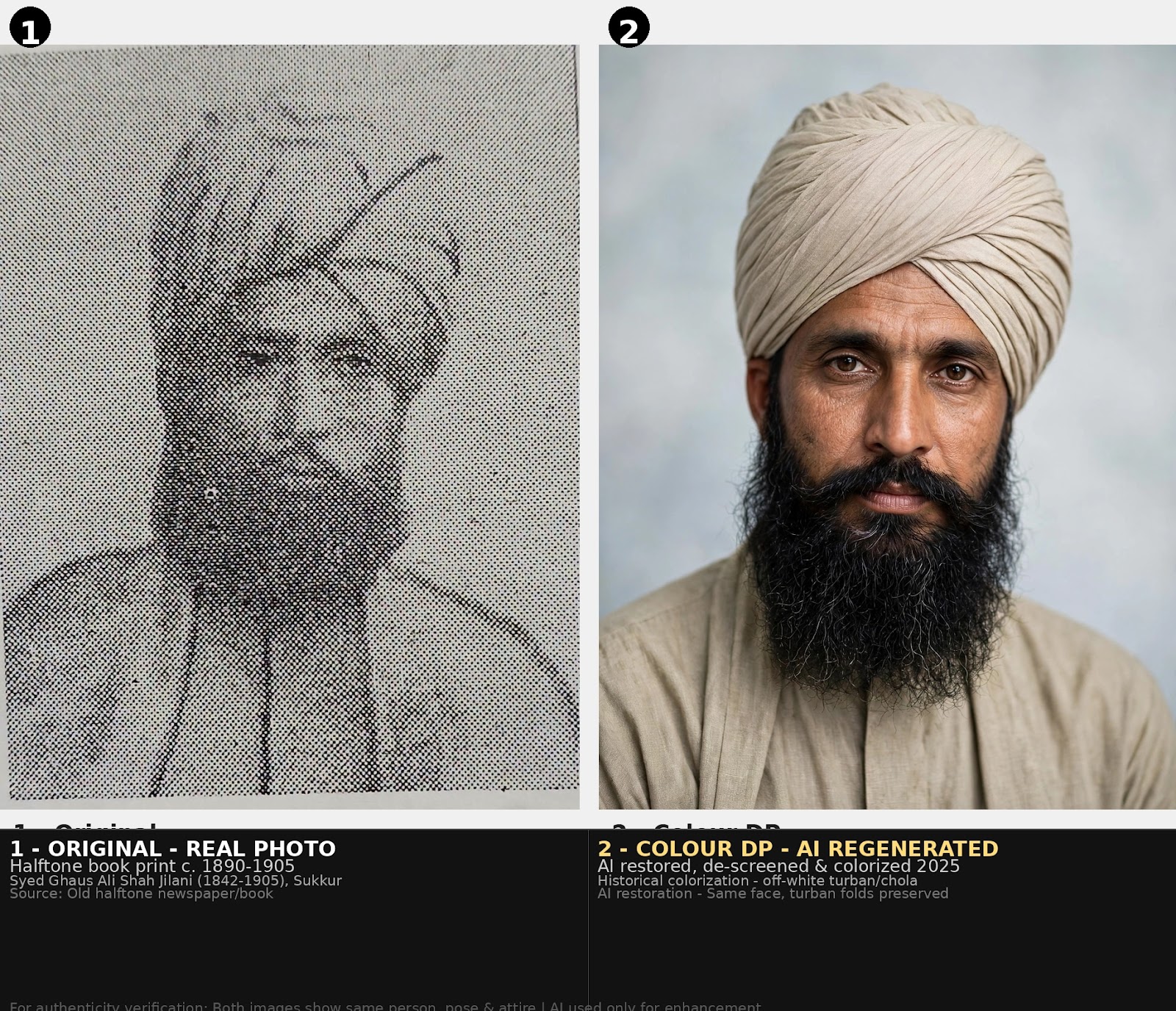
The name attached to the Chhapri hospital is that of Khan Bahadur Ghous Ali Shah Jilani (1842–1905). In local accounts his family traced its line to Baghdad, migrated to Punjab, and settled finally in Sindh. He is remembered as a member of the Sukkur Municipal Board for 33 consecutive years, returned with support from both Hindu and Muslim ratepayers, and honoured by the board when it gave the civil hospital his name.
The arithmetic is worth doing, because it is the one part of the story that can be tested. Thirty-three years ending at his death in 1905 takes his service back to about 1872 — the eve of the Bombay District Municipal Act of 1873, the legislation that regularised elected municipal boards across Sindh. A public career of that length in that decade is entirely plausible; the exact years are not, so far as I can find, in any printed list.
One point of clarification about the “joint electorate” often mentioned in local accounts. Before the constitutional reforms of 1919 extended separate communal electorates, municipal seats in Bombay Presidency towns were generally filled by ratepayers voting on a common roll, with some seats set aside by community. A leader who won repeatedly in that system was winning on standing and service rather than on a communal bloc — which is why the memory of him is warmer than the paper trail is thick.
The account above is Sukkur’s own, and its authorities should be named. It is carried by Sayed Imdad Hussain Shah Rizvi of Rohri, an oral historian and keeper of municipal family papers, and by two Sindhi printed works that the tradition cites: Parasram Verumal Masand’s Sukkur Sonharo (1940) and Rahimdad Khan Molai Shedai’s Tarikh-e-Sukkur (1985). Neither book is digitised, and I was not able to consult either directly for this article, so they are named as the tradition’s own authorities rather than offered as corroboration. A reader with access to a Sindhi library collection — the Panhwar library in Hyderabad, or the Aror University collection in Sukkur — could test both the 1859 date and the 33 years against them.
If any single document would settle the 1859 question, it is the minute book of the Sukkur Municipal Board for the 1850s and 1860s, held with municipal records in Sindh. Until someone reads those pages, the honest position is that the 1859 hospital is remembered, not proved.
1880: the Civil Hospital on the hill
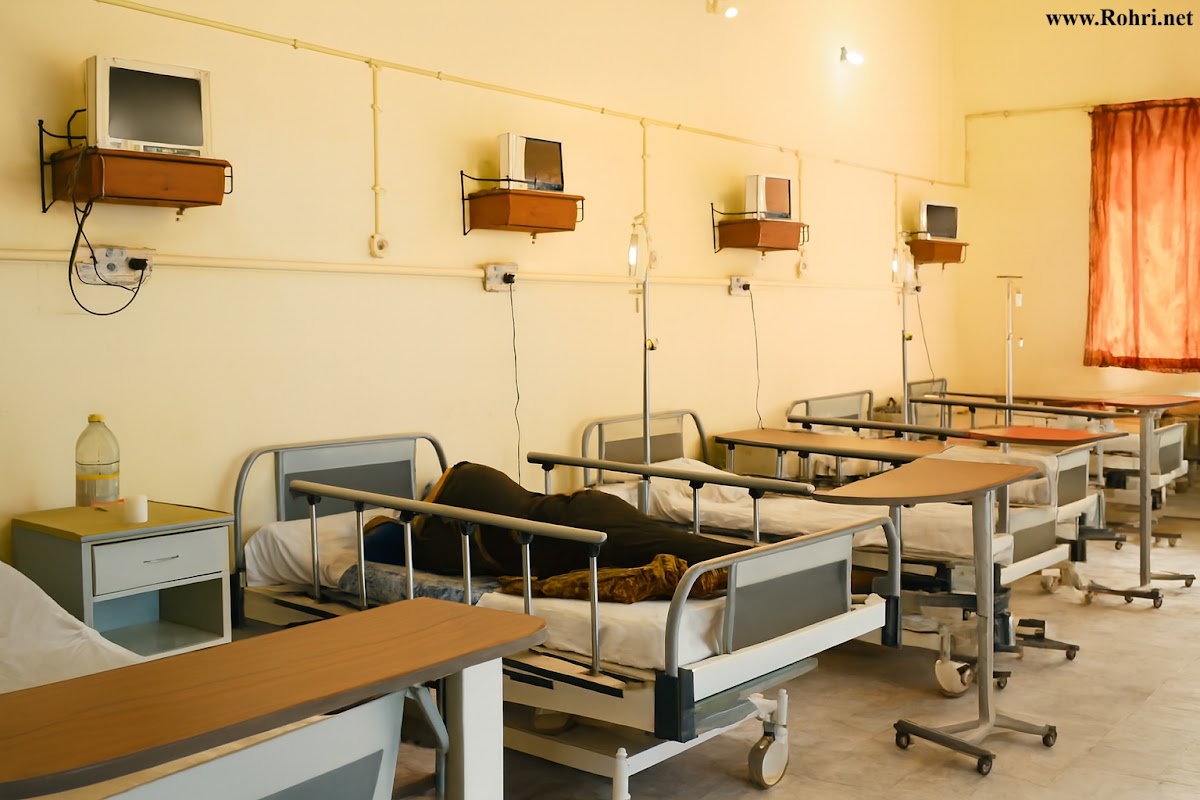
What the printed record does prove is the next step. The Gazetteer of the Province of Sind, Volume III: Sukkur District (1907) is unambiguous:
“This hospital was opened in 1880, and consists of a series of single-storied buildings on the hill to the north of the town overlooking the railway. It is in charge of the civil surgeon, and besides the usual staff, there is a nursing staff under the control of a special committee. There are 15 wards.”
The siting tells its own story. The old town crowded around the minaret; the new hospital stood on open high ground above the railway, in the direction the city was already growing. The line had reached the Indus opposite Sukkur in the late 1870s, and the Lansdowne Bridge would carry it across in 1889. The North-Western Railway contributed to the hospital’s running costs, alongside the municipality — a railway town paying for a railway hospital.
| Sukkur Civil Hospital in 1915, as recorded in the 1907 Gazetteer | |
|---|---|
| Opened | 1880 |
| Design | Series of single-storeyed buildings on the hill north of town, overlooking the railway |
| Wards | 15 |
| Inpatients treated | 1,099 |
| Outpatients treated | 7,135 |
| Annual cost | About Rs 52,000, contributed by the Municipality and the North-Western Railway |
| Charge | Civil Surgeon, with a separate nursing staff under a committee |
The same health chapter lists the town’s other institutions: a Lady Dufferin Hospital, an eye hospital, a municipal dispensary, and — in the district — a veterinary dispensary at Shikarpur, established in 1893, which treated 248 inpatients and 1,917 outpatients in 1915. It also notes that Shikarpur had possessed a civil hospital since the early days of British rule, and that this hospital was transferred to the new district of Larkana in 1909.
That last detail should temper any claim that Sukkur’s 1880 hospital was the first in the region. It was the first in Sukkur town. Shikarpur, the older commercial city to the west, was already ahead of it.
How the two stories fit together
There are three ways to read the evidence, and it is worth stating all three rather than choosing the tidiest.
One. The 1859 hospital and the 1880 hospital are the same institution, and the date in local memory is wrong or refers to an earlier dispensary on the same site.
Two. They are different buildings: a small civil hospital or dispensary serving the old town from 1859, replaced in 1880 by a purpose-built hospital on the hill, with the old building kept on as a dispensary and carrying Ghous Ali Shah Jilani’s name.
Three. The 1859 building was never a hospital in the modern sense at all, but a municipal sick-house with a few beds, remembered generously by a town that valued it.
The second reading fits the geography best. A hospital serving the crowded old town belongs on the Chhapri slope, within walking distance of the bazaar; a hospital serving a railway city and a cantonment belongs on the hill. The 1907 Gazetteer describes a town with several dispensaries as well as the big hospital, which is consistent with a smaller institution continuing in the old town after 1880. And the survival of the Chhapri building as a dispensary is exactly what happens to a superseded hospital.
What would settle it: the Sukkur Municipal Board minutes for 1859–1905; the annual municipal administration reports for the Bombay Presidency, which tabulate dispensaries by town; the civil surgeon’s annual returns for Sukkur; and the files of the district gazetteer’s successor volumes. None of these is digitised. All of them are the kind of source that changes a local tradition into a documented fact — or corrects it.
Walking the ground today
The whole story fits inside a fifteen-minute walk, which is unusual for a history this old.
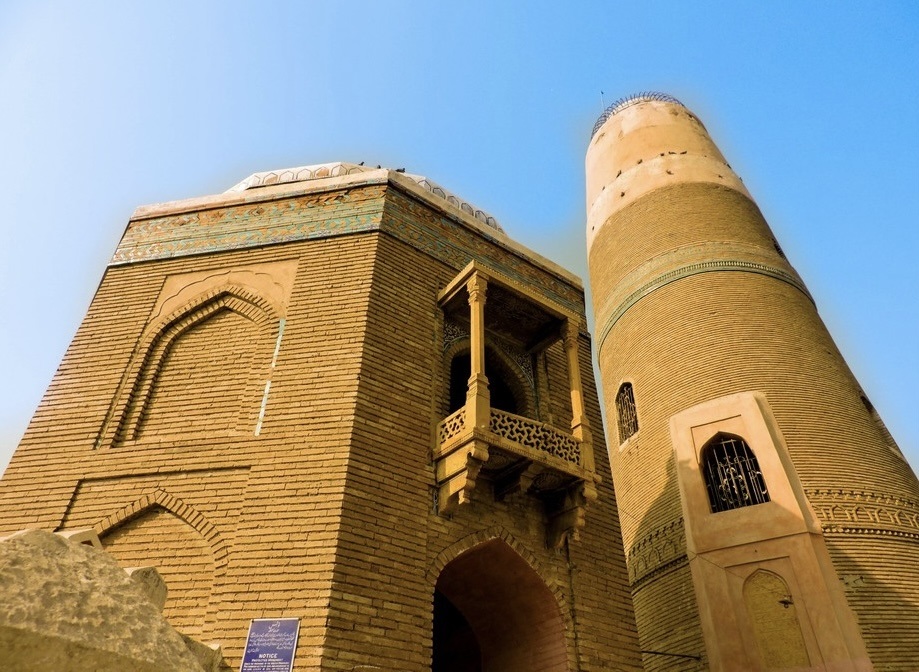
- Start at the Masum Shah Minaret. The tower is early seventeenth century: the inscription over the door is dated A.H. 1002 (A.D. 1593), and the heritage record gives about 1607 for its completion. Its builder, Mir Masum, wrote the Tarikh-i-Masumi and governed Sukkur under Akbar.
- Walk downhill towards Ghanta Ghar. The road bends; behind the former Utility Store, in the lane on the turn, is the building remembered as the 1859 civil hospital, now a dispensary, with the City Magistrate’s court next door.
- Note the school opposite the minaret. The 1907 Gazetteer says the high school on Minaret Road “is said to have existed before 1859” and that its exact origin was unknown even then — a reminder that Sukkur’s institutional memory was already blurring a century ago.
- Finish at Ghanta Ghar, the clock tower of 1937 at the market crossroads, and then take transport to the Civil Hospital on the hill north of the railway for the 1880 site.
Both the Chhapri building and the hill hospital are working public institutions. Ask before photographing staff, patients or wards.
On the map below, the pin marks the building the town remembers as the Old Municipal Dispensary, later named the Ghaus Ali Shah Hospital. It stands on the Chhapri rise below the Masum Shah Minaret, on the left-hand side of the road as it turns down towards Ghanta Ghar, in the lane behind the building formerly used by the Utility Store, with the old City Magistrate’s court beside it. The coordinates — roughly 27°42’15″N 68°52’23″E — are approximate, accurate enough to find the lane and not the doorway.
Timeline
| Year | Event |
|---|---|
| 1593 | Persian inscription of the Masum Shah Minaret dated A.H. 1002 |
| c. 1607 | Minaret completed, according to the 1907 Gazetteer, about fourteen years after the inscription |
| 1843 | British annexation of Sindh after Miani; Sukkur becomes a garrison and transit town |
| 1844 | 78th Highlanders at Sukkur; more than 800 men under treatment; survivors evacuated downriver in December |
| 1845 | Memorial to the regiment’s dead commissioned from John Steell for St Giles’ Cathedral, Edinburgh |
| 1845 | Local tradition: cholera returns, the military hospital closes, and the building is later converted into the Government High School opposite the minaret |
| 1859 | Civil hospital founded on the Chhapri slope, according to local tradition |
| 1872–1905 | Ghous Ali Shah Jilani’s long service on the Sukkur Municipal Board, by local account 33 years |
| 1880 | Sukkur Civil Hospital opened on the hill north of town, overlooking the railway |
| 1907 | Gazetteer of Sukkur District records 15 wards and lists the town’s dispensaries with establishment dates “not known” |
| 1915 | Civil Hospital treats 1,099 inpatients and 7,135 outpatients |
| Today | Hill hospital serves as a teaching hospital; the Chhapri building functions as a civil dispensary |
Frequently asked questions
What was the first hospital in Sukkur?
The earliest hospital that can be documented is the British military hospital of the 1840s, where more than 800 men were under treatment during the 1844 epidemic. Local tradition dates a civil hospital to 1859 on the Chhapri slope; colonial records date the Civil Hospital on the hill to 1880.
Was there really a cholera epidemic in Sukkur in 1845?
The documented outbreak is 1844. The 78th Highlanders marched up the Indus to Sukkur that year, the hospital filled, and the survivors were evacuated to Hyderabad on 21 and 25 December 1844. Local memory places the closure a year later, in 1845. Contemporary medical opinion called it fever and blamed malaria and limestone exhalations; it was almost certainly cholera.
Who was Ghous Ali Shah Jilani?
Khan Bahadur Ghous Ali Shah Jilani (1842–1905) is remembered in Sukkur as a municipal member for 33 years, honoured by the board when the Chhapri civil hospital was named after him. His family is said to have come from Baghdad via Punjab to Sindh. No printed record of his municipal service that I could locate has survived online.
Is the 1859 date for Sukkur’s first civil hospital reliable?
It is local tradition rather than a printed record. The 1907 Gazetteer lists Sukkur’s dispensaries but gives their year of establishment as “not known”. The date could be confirmed from the Sukkur Municipal Board minutes or the Bombay Presidency municipal reports, neither of which is digitised.
Why is there a Sukkur memorial in Edinburgh?
Officers, NCOs and privates of the 78th Highlanders subscribed about 1,000 rupees to commemorate comrades who died at Sukkur. The sculptor John Steell made the monument, which stands in St Giles’ Cathedral.
When did Sukkur Civil Hospital open, and how big was it?
It opened in 1880, on the hill north of the town overlooking the railway. The 1907 Gazetteer records 15 wards and, for 1915, 1,099 inpatients and 7,135 outpatients, at an annual cost of about Rs 52,000 shared by the municipality and the North-Western Railway.
Can you visit the old hospital building in Sukkur today?
The building remembered as the Chhapri civil hospital still stands in the lane behind the former Utility Store, on the slope from the Masum Shah Minaret down towards Ghanta Ghar, and is used as a civil dispensary. It is a working public building, so ask before photographing staff or patients.
Where exactly was Sukkur’s first civil hospital?
Locally it is placed on the Chhapri slope, in the turn of the road that descends from the Masum Shah Minaret towards Ghanta Ghar Bazaar, in the lane behind the building later occupied by the Utility Store, with the City Magistrate’s court beside it. The same building now serves as a government civil dispensary.
Sources and further reading
- Government of Bombay, Gazetteer of the Province of Sind, Volume III: Sukkur District (1907), Chapter XII “Health”, pp. 37–38, and Chapter on Education, pp. 33–35. Full text: irrigation.sindh.gov.pk and Internet Archive.
- Tim Willasey-Wilsey, “A Melancholy Monument to the Ravages of Disease in British India”, The Victorian Web. Quotations from Captain Keogh’s journal, Allen’s Indian Mail, the Asiatic Journal, and Sir William Napier’s History of General Sir Charles Napier’s Administration of Scinde (1851): victorianweb.org.
- Allen’s Indian Mail and Register of Intelligence, London, 4 January 1845; Asiatic Journal and Monthly Miscellany, November 1844 – April 1845.
- The Edinburgh Medical and Surgical Journal, vol. 76 (1851), on the sickness of the 78th at Sukkur.
- Sir William Napier, The History of General Sir Charles Napier’s Administration of Scinde (London: Chapman and Hall, 1851); letter in The Times, 24 March 1845.
- Heritage Foundation Pakistan, “Masum Shah Minaret, Sukkur”: heritage.eftsindh.com; and Wikipedia: Masum Shah.
- Sukkur district municipal and dispensary history on this site: Sukkur Municipal Corporation history and the municipality’s finances in the 1900s.
- Sayed Sajjad Hussain Musavi, Sukkur Civil Hospital: location, GPS and visitor tips, and Chhapri Otaro, Sukkur.
- For the Sindhi-language histories named in this article: the M.H. Panhwar library catalogue of Sindh books and gazetteers (PDF), and the Aror University Central Library e-resources portal in Sukkur. Neither holds the two books online, but both are the right places to ask.
- Muhammad Siddique G. Memon, Sukkur Then and Now (2000), listed in the Sindhi Sanchaya digital collection: sindhisanchaya.in/books/45270. Useful for street-level detail on the Chhapri quarter.
A note on method. This article distinguishes throughout between what a contemporary document records and what the town remembers. Where the two disagree — the year of the military hospital’s catastrophe, the date of the civil hospital’s foundation — both versions are given. Nothing here should be read as dismissing local memory: in Sukkur, as in most of Sindh, the oral record often outlasts the paper one.
Read next
- Sukkur Civil Hospital: history, location and visitor guide
- Masum Shah Minaret: the tower above the old hospital
- Chhapri Otaro: the river landing below the hospital slope
- Cholera and plague in Rohri and Sukkur, 1869 and 1897
- How Sukkur’s municipality began
- The children’s hospital that came next
- Sukkur District Local Board: the body that funded rural dispensaries
- Sukkur’s Deputy Commissioner’s office, inaugurated in 1901
- Tekchand Bolchand Park on Bunder Road
- Lansdowne Bridge: the railway crossing the 1880 hospital overlooked
Post: Sayed Sajjad Hussain Musavi. First published November 2026. Corrections and documentary leads are welcome in the comments.
Frequently Asked Questions
What was the first hospital in Sukkur?
The earliest hospital that can be documented is the British military hospital of the 1840s, where more than 800 men were under treatment during the 1844 epidemic. Local tradition dates a civil hospital to 1859 on the Chhapri slope; colonial records date the Civil Hospital on the hill to 1880.
Was there really a cholera epidemic in Sukkur in 1845?
The documented outbreak is 1844. The 78th Highlanders marched up the Indus to Sukkur that year, the hospital filled, and the survivors were evacuated to Hyderabad on 21 and 25 December 1844. Local memory places the closure a year later, in 1845. Contemporary medical opinion called it fever and blamed malaria and limestone exhalations; it was almost certainly cholera.
Who was Ghous Ali Shah Jilani?
Khan Bahadur Ghous Ali Shah Jilani (1842-1905) is remembered in Sukkur as a municipal member for 33 years, honoured by the board when the Chhapri civil hospital was named after him. His family is said to have come from Baghdad via Punjab to Sindh. No printed record of his municipal service that I could locate has survived online.
Is the 1859 date for Sukkur’s first civil hospital reliable?
It is local tradition rather than a printed record. The 1907 Gazetteer lists Sukkur’s dispensaries but gives their year of establishment as ‘not known’. The date could be confirmed from the Sukkur Municipal Board minutes or the Bombay Presidency municipal reports, neither of which is digitised.
Why is there a Sukkur memorial in Edinburgh?
Officers, NCOs and privates of the 78th Highlanders subscribed about 1,000 rupees to commemorate comrades who died at Sukkur. The sculptor John Steell made the monument, which stands in St Giles’ Cathedral.
When did Sukkur Civil Hospital open, and how big was it?
It opened in 1880, on the hill north of the town overlooking the railway. The 1907 Gazetteer records 15 wards and, for 1915, 1,099 inpatients and 7,135 outpatients, at an annual cost of about Rs 52,000 shared by the municipality and the North-Western Railway.
Can you visit the old hospital building in Sukkur today?
The building remembered as the Chhapri civil hospital still stands in the lane behind the former Utility Store, on the slope from the Masum Shah Minaret down towards Ghanta Ghar, and is used as a civil dispensary. It is a working public building, so ask before photographing staff or patients.
Where exactly was Sukkur’s first civil hospital?
Locally it is placed on the Chhapri slope, in the turn of the road that descends from the Masum Shah Minaret towards Ghanta Ghar Bazaar, in the lane behind the building later occupied by the Utility Store, with the City Magistrate’s court beside it. The same building now serves as a government civil dispensary.

Leave a Reply