Sukkur city sits on the west bank of the Indus River in northern Sindh, Pakistan, directly facing its much older twin, Rohri. With 563,851 residents recorded in the 2023 census, it is the third largest city in Sindh after Karachi and Hyderabad, and the trading, transport and education hub of upper Sindh. Most people know Sukkur for the Sukkur Barrage, one of the largest irrigation works in the world, but the city offers far more: colonial-era bridges, riverside parks, Sufi shrines, an Indus Valley Civilization mound, and one of the warmest welcomes in Sindh.
This guide covers everything a first-time visitor or researcher needs: where Sukkur is located, how far it is from Karachi, the weather by season, the airport and railway station, hotels, food, and the places worth your time. Every fact is sourced from published references listed at the end, and the deeper heritage stories are linked to detailed articles on this site.
Sukkur City Quick Facts
| Province | Sindh, Pakistan |
| Location | West bank of the Indus River, 27.70°N 68.85°E |
| Population (city) | 563,851 (2023 census); 551,357 (2017 census) |
| Area | About 300 km² (city) |
| Elevation | 67 m (220 ft) |
| Climate | Hot desert (Köppen BWh), about 160 mm rain a year |
| Languages | Sindhi, Urdu; Saraiki and Punjabi in trade circles |
| Airport | Begum Nusrat Bhutto International Airport (IATA: SKZ) |
| Best known for | Sukkur Barrage, Lansdowne Bridge, Sadh Belo, dates market |
Where Is Sukkur Located?
Sukkur is located in northern Sindh on the right (west) bank of the Indus River, roughly 470 km north-east of Karachi by road. The river splits the twin cities here: Sukkur on the west bank, Rohri on the east, and the small fortified island of Bukkur between them. Two road bridges and the barrage itself link the banks, making Sukkur one of the few true river-crossing points for hundreds of kilometres.
Sukkur district borders Khairpur to the east, Shikarpur to the west, and Naushahro Firoze across the Indus to the south. The city is also the administrative seat of Sukkur Division, which covers several northern Sindh districts. On any map of Pakistan, look for the bend of the Indus where the river turns south-west after Khairpur — that bend is Sukkur.
Sukkur to Karachi Distance and Other Key Routes
The Sukkur to Karachi distance is about 470 km by road on the N-5 National Highway, a drive of roughly six and a half to seven and a half hours depending on traffic through Hyderabad. By rail the two cities are a little over 460 km apart on the historic Karachi–Peshawar main line. Since 2019 the M-5 Sukkur–Multan Motorway has cut the journey north to Multan to about three and a half hours.
| From Sukkur to | Distance (road) | Typical drive |
|---|---|---|
| Karachi (via N-5) | ~470 km | 6.5–7.5 hours |
| Hyderabad (via N-55 Indus Highway) | ~365 km | 4.5–5 hours |
| Multan (via M-5 Motorway) | ~392 km | 3.5–4 hours |
| Larkana (via N-55) | ~105 km | 1.5–2 hours |
| Khairpur | ~30 km | 40 minutes |
A Short History of Sukkur City
The land under Sukkur has been lived on for thousands of years. The mound of Lakhueen-jo-daro on the city outskirts belongs to the Indus Valley Civilization, the same cultural world as Mohenjo-daro further south. Just across the river, Aror (Alor) served as the ancient capital of Sindh until Muhammad bin Qasim captured it in 712 CE, and Raja Dahir, the last Hindu king of Sindh, ruled from this region. The full story of the east bank is covered in our guide to Rohri, Sindh.
Sukkur itself grew from a small riverside settlement whose name is traced to “sakhar”, meaning sugarcane in Sindhi — a fitting name for a district that still processes cane today. Under the British, the town gained a municipality in 1862, a cantonment, a river port, and a railway connection that turned it into a garrison and grain market. Then came the project that made the modern city: the Sukkur Barrage, completed in 1932, which brought canal irrigation and prosperity to millions of acres and pulled workers, traders and officials to Sukkur from across British India.
Sukkur Barrage: The Lifeline on the Indus
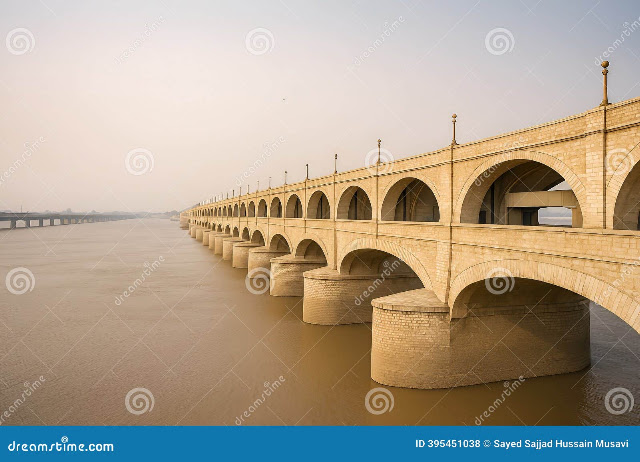
The Sukkur Barrage, whose foundation stone was laid on 24 October 1923, was completed in 1932 and inaugurated by the Viceroy of India, Lord Willingdon. It was designed by Sir Arnold Musto and constructed under Chief Engineer Sir Charlton Harrison. The structure stretches 1,524 m (5,001 ft) across the Indus with 66 gates, each about 18 m (60 ft) wide.
Its seven major canals — including the Nara, Rohri, Rice and North Western canals — feed what is often described as the largest single irrigation network in the world, watering nearly 10 million acres of farmland across Sindh and beyond. Without the barrage, the wheat, cotton, rice and sugarcane economy of northern Sindh simply would not exist. Visitors can walk the barrage road to watch the Indus pour through the gates, especially dramatic during the monsoon floods of July and August.
The Two Great Bridges: Lansdowne and Ayub
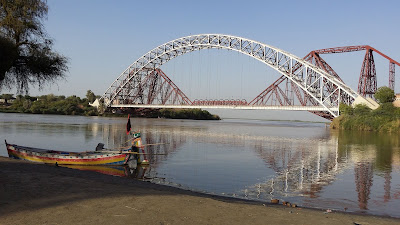
Downstream of the barrage stands the Lansdowne Bridge, opened in 1889. This steel cantilever bridge connected Sukkur to Rohri and, for decades, was one of the longest cantilever spans in the world — a feat of British Raj engineering that even appeared in the 1956 Hollywood film Around the World in 80 Days. The bridge now carries pedestrians and serves as a beloved city landmark.
Road traffic shifted to the Ayub Bridge, built in 1962 as a road-cum-rail crossing, with the railway later moved to a separate bridge beside it. Standing on either bridge at sunset, with the river glinting below and the hills of Rohri behind, remains the classic Sukkur experience.
Sukkur Weather and the Best Time to Visit
Sukkur has a hot desert climate (Köppen BWh). Recorded temperatures span from −1.5°C in winter to 50.5°C in summer, and the city averages only about 160 mm of rain a year. Summers from May to September are punishing, with late-afternoon highs routinely above 45°C. Monsoon rains arrive between July and September and can raise the river level at the barrage dramatically.
The best time to visit Sukkur is from November to February, when daytime temperatures sit between roughly 22°C and 28°C and nights are cool. March and October are workable shoulder months. For a live forecast before you travel, check the Pakistan Meteorological Department.
How to Reach Sukkur
By Air: Sukkur Airport (SKZ)
Begum Nusrat Bhutto International Airport, about 8 km from the city centre, serves Sukkur with domestic flights, most often to Karachi and Islamabad. Airlines and schedules change seasonally, so confirm timings with the carrier or the Civil Aviation Authority before booking. The airport has a long history of its own, traced in our article on the first airport of Sukkur and in the overview of Sukkur transport networks.
By Train: Sukkur Railway Station and Rohri Junction
Sukkur railway station lies on the Karachi–Peshawar main line and is served by expresses such as the Sukkur Express and Green Line. A few kilometres east, Rohri Junction is one of the busiest railway junctions in Pakistan, where the line to Quetta branches off. Tickets and timetables are listed on Pakistan Railways. The colonial history of both stations is covered in our guides to Sukkur Railway and Rohri Railway Station.
By Road
Sukkur is a national crossroads. The N-5 runs through the city to Karachi and up towards Punjab, the N-55 Indus Highway follows the river’s west bank to Hyderabad, and the M-5 motorway connects Sukkur to Multan in about three and a half hours. Long-distance coaches, Daewoo and Faisal Movers among them, run daily services from terminals on the bypass road.
Hotels in Sukkur: Where to Stay
Sukkur hotels cluster in three areas, each with a different character:
- Bunder Road and the riverfront — the most scenic option, with hotels and guest houses overlooking the Indus, walking distance from Ghanta Ghar and the barrage side.
- Near the railway station and civil lines — practical mid-range hotels for business travellers and train arrivals.
- Airport Road and the bypass — newer budget hotels and guest houses convenient for early flights or motorway stops.
As of 2026, typical rates run from about PKR 3,000–6,000 for a clean budget room, PKR 7,000–15,000 for mid-range comfort, and higher for riverside suites. Prices jump around Eid, Muharram and the winter wedding season, so book early. Always check current reviews and rates on a booking platform before paying a deposit.
Food and Restaurants in Sukkur
Sukkur restaurants serve hearty Sindhi cuisine built around the river and the farms. The specialties to seek out:
- Palla fish — the hilsa-like Indus shad, fried or cooked in tomato gravy; peak season is spring and early summer.
- Sai bhaji — spinach and lentils slow-cooked with rice, the everyday soul food of upper Sindh.
- Sindhi biryani — spicier and tangier than its Karachi cousin, with potatoes and aloo bokhara.
- Khairpur dates — Sukkur district is date country; fresh khajoor hits the bazaars each summer.
- Sheer khurma and Sindhi sweets — best from the old-city confectioners around Ghanta Ghar.
For sit-down meals, the Bunder Road and Barrage Road restaurants offer river views, while the bazaars of both Sukkur and Rohri hide excellent kebab and biryani houses — see our detailed Rohri restaurants guide.
Frequently Asked Questions About Sukkur City
Where is Sukkur city located?
Sukkur is located on the west bank of the Indus River in northern Sindh, Pakistan, at about 27.70°N latitude and 68.85°E longitude. It faces Rohri on the opposite bank and lies roughly 470 km north-east of Karachi.
What is the Sukkur to Karachi distance?
The Sukkur to Karachi distance is about 470 km by road on the N-5 National Highway, taking roughly six and a half to seven and a half hours by car. By train the two cities are a little over 460 km apart on the Karachi–Peshawar main line.
What is Sukkur famous for?
Sukkur is famous for the Sukkur Barrage, completed in 1932 and still one of the largest irrigation works in the world, the 1889 Lansdowne Bridge, the Sadh Belo river-island temple, the Masoom Shah minaret, and its position as the trade hub of upper Sindh.
When was the Sukkur Barrage built?
Construction began after the foundation stone was laid on 24 October 1923, and the barrage was completed and inaugurated in 1932 by the Viceroy of India, Lord Willingdon. It was designed by Sir Arnold Musto under Chief Engineer Sir Charlton Harrison.
What is the best time to visit Sukkur?
November to February is the best time to visit, when daytime temperatures are around 22°C to 28°C. Summer (May to September) regularly exceeds 45°C and is unsuitable for sightseeing.
Does Sukkur have an international airport?
Yes. Begum Nusrat Bhutto International Airport (IATA code SKZ) sits about 8 km from the city centre and operates mainly domestic flights, most often to Karachi and Islamabad. Check current schedules with the airline or the Civil Aviation Authority.
Places to Visit in Sukkur and Rohri
Two days cover the highlights comfortably. Our full itinerary is in 15 Best Places to Visit in Sukkur and Rohri; the essentials:
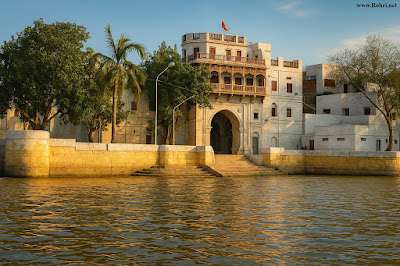
- Sadh Belo Temple — a white marble Hindu temple complex on a river island, founded in the 1820s, reached by boat from Sukkur.
- Masoom Shah Minaret — a 17th-century brick tower of about 84 feet on a hilltop, with views across the whole city.
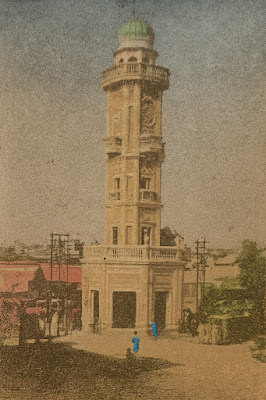
- Ghanta Ghar (Clock Tower) — the 1937 Sunderdas Dayomal Tower at the heart of the old bazaar.
- Lansdowne Bridge and Ayub Bridge — 1889 and 1962 respectively, best photographed at sunset.
- Bukkur Island — the fortress island between the bridges, home to shrines and a ruined fort.
- Tekchand Bolchand Park — a heritage riverside park on Bunder Road since 1934.
- Kot Diji Fort — a short drive east into Khairpur district; a pre-Islamic fort with Talpur-era walls.
- Aror ruins — the ancient capital site near Rohri, with the early Muhammad bin Qasim mosque remains.
Economy and Education
The barrage canals made Sukkur a farm-economy powerhouse: wheat, cotton, sugarcane, rice and dates move through its markets, and the city hosts the Sukkur Industrial and Trading Estate (SITE) with rice mills, cotton gins, sugar processing and light manufacturing. The famous date market of nearby Khairpur feeds directly into Sukkur trade routes.
Education has grown fast in the last two decades. Sukkur IBA University built a national reputation for business and computer science; Begum Nusrat Bhutto Women University serves female students across upper Sindh; Ghulam Muhammad Mahar Medical College trains doctors at the civil hospital; and Aror University of Art, Architecture, Design and Heritage in Rohri is the only university in Pakistan dedicated to heritage disciplines.
Why Sukkur Matters
Few cities in Pakistan combine a living river civilization, colonial engineering monuments, active multi-faith heritage and modern university life in such a compact space. Sukkur is not a polished tourist city — it is a working river city, and that is exactly its charm. Come for the barrage, stay for the bridges, the bazaars and the fish.
References and Further Reading
- Encyclopaedia Britannica — Sukkur: Indus River city, Sindh Province
- Wikipedia — Sukkur (population, geography, climate, universities; 2017 and 2023 census figures from the Pakistan Bureau of Statistics)
- Wikipedia — Sukkur Barrage (design, gates, canals, irrigation network)
- Pakistan Bureau of Statistics census tables via CityPopulation.de — Sukkur District
- Pakistan Railways — official timetables and booking
- Civil Aviation Authority of Pakistan — airport information
- Pakistan Meteorological Department — Sukkur forecasts and climate data
- H. T. Lambrick, A History of Sind — standard scholarly history of the region, including Aror and the British period.
- Rohri.net (sister heritage site) — Rohri, Sindh: Complete History, Heritage Sites & Travel Guide
- Rohri.net — Raja Dahir: Last Hindu King of Sindh and Aror (Alor)

[…] Market access: farmers struggle to obtain fair prices when storage, transport, market information or access to buyers is limited — a constraint felt hardest in smaller towns around Sukkur city. […]
[…] summers — Sukkur routinely records some of the hottest temperatures on earth, as noted in our Sukkur city guide — and through the annual floods, which had to be routed around the works each monsoon. The […]
[…] of Pakistan. Whether you are flying in for business, a family visit, or to explore the heritage of Sukkur city and nearby Rohri, this guide covers everything travellers ask about: the airport code, the current […]
[…] In the narrow streets of Old Sukkur stands an institution whose quiet work has changed thousands of lives: Nare Shala (ناري شالا, “Women’s School”). Founded in 1933 by the visionary railway officer Devan Pasu Mal Bhagwandas Chandwani, Nare Shala has stood for almost a century as a beacon of hope and empowerment, committed to uplifting widows, orphans and underprivileged girls through free training and education. Its story is one of the most moving chapters in the social history of Sukkur city. […]